
History
Ancient Beginnings
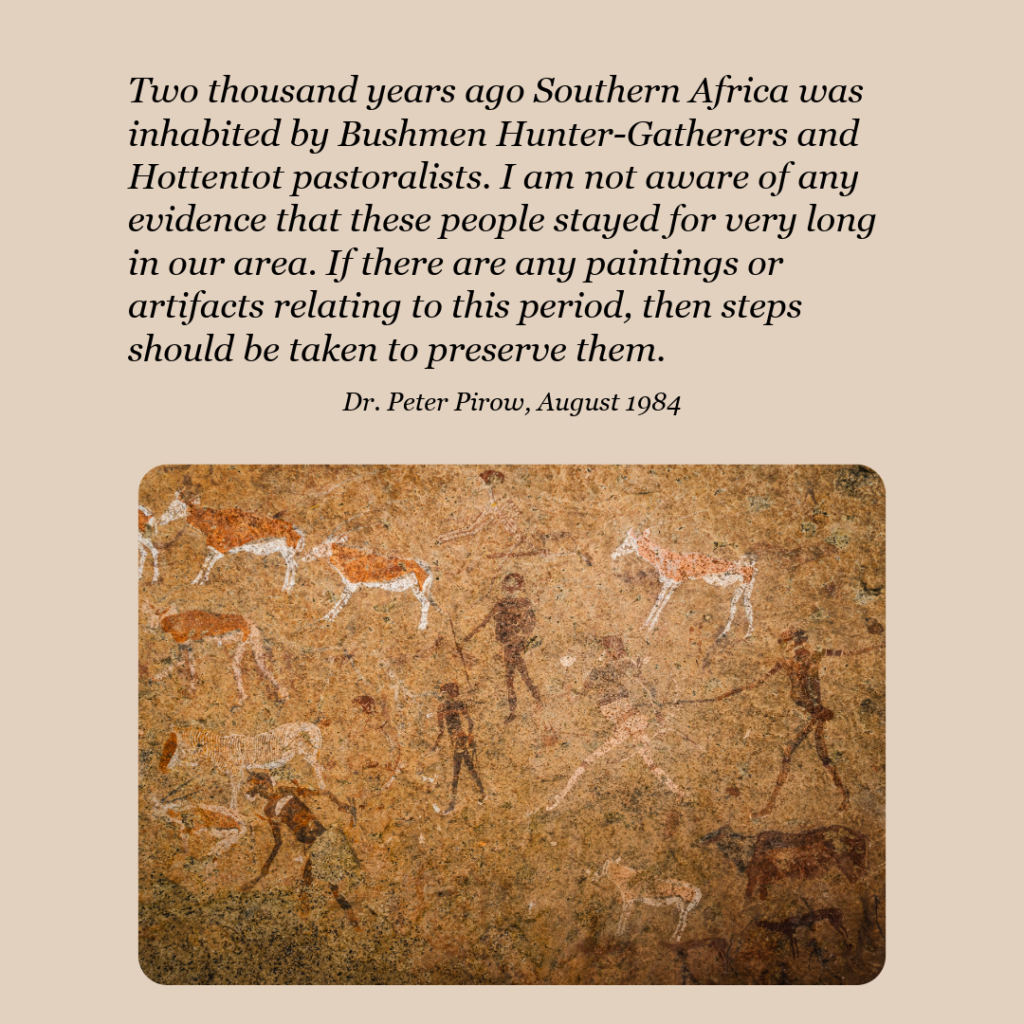
About 1,900 years ago a group of people moved south across the Zambezi, using iron implements. An Iron Age kraal site exists just east of the boundary between Hartzenbergfontein and Roodepoort. The site features a curious bend in the outer wall — the mystery was solved when Dr. Pirow’s son suggested digging, and water was found beneath.
There are many sites around the district indicating human presence here for hundreds, possibly thousands, of years. Three well-known settlement remains are found in Grade Road at Walker’s Fruit Farms; at the base of Perdeberg (thought to be particularly ancient); and at plot 143, Homestead Apple Orchards. Village remains of unknown era are also visible from the ridge at Walkerville Manor, best seen in winter
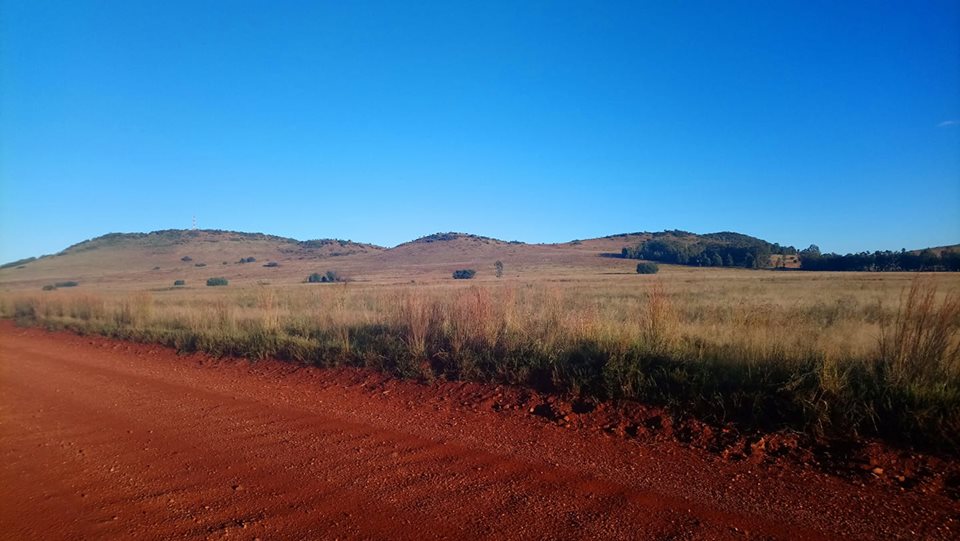
Local artist Colleen Mulrooney was commissioned to sketch some of the area’s historical sites, including rock structures atop Spioenkop. Speculation holds that a deep hole there could be a well, or a shaft for iron mined by native tribes passing through on their way to Zimbabwe.
Stone kraals appear in several places across the area, most on high ground away from farming and residential activity. On top of Perdeberg, walls stretch for considerable distances — some appearing much older than others, judging by moss growth and weathering. It is possible that two distinct groups built kraals there: Iron Age settlers first, followed centuries later by Boer commandos fighting in the area
European Settlement & The Greyling Era
Due to the lack of written records, it is not known exactly when the first Europeans settled in the district, but it was probably around the same time that gold was discovered on the Reef in 1884. The first known white settler in the Walkerville area was an unnamed Voortrekker who arrived around 1838. Remains of a hut built using the front axle of his wagon still stand near Dairy Cottage on Woodacres Dairy Farm.
This Voortrekker sold the Hartzenbergfontein property to Hendrik Balthazar Greyling around 1859, and the property — over 3,422 morgen in extent — was formally transferred on 11 December 1861. The original deed of transfer has been lost, though it is referred to in numerous subsequent deeds.
Hendrik Greyling died in 1879. His wife, Anna Margaretha née Scheepers, divided the farm into undivided portions among herself and her nine children, as recorded in Title Deeds 1879/679 to 687. Each tenth share equated to over 342 morgen at a cost of £15 per share. These tenth shares form the basis of the present subdivision of Hartzenbergfontein. Walkerville and its surrounds occupy two of those tenths; a further two remain in the hands of Greyling family descendants — the two large Kamfer farms.
In the latter part of the 19th century, farms were vast — measured by how far a horse could walk in a day, roughly 3,000 morgen (6,300 acres). There were no boundary fences, and subdivision was forbidden except for family inheritance. Families were correspondingly large, which often created complications upon the death of the patriarch.
After the death of President Paul Kruger in the early 20th century, this statute was relaxed. As population grew and land became a valued commodity, these enormous farms were gradually divided into the 5-, 10- and 20- acre plots common today. The law required, however, that 50% of any farm remain as commonage for livestock grazing by plot purchasers — a tradition that persists in the area known as the Common to this day.
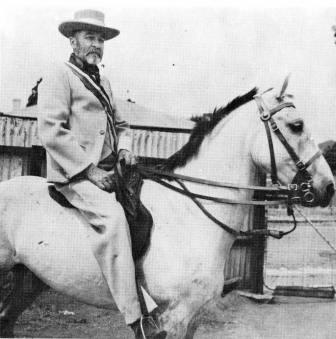
The Farm Faraosfontein & Arthur Walker

The farm Varkensfontein plays a central role in the area’s development. It covered what we know today as The Common, the Weilbach dairy, Homestead Apple Orchards, Golf View, and the Ohenimuri golf course. Originally owned by a Mr Botha, the farm straddled the main Cape Town–Johannesburg Road — now the Old Vereeniging Road — and its main house served as an overnight stop for coaches heading to Johannesburg.
Mr Botha sold the farm to Johan Daniël Weilbach, whose descendants still own the dairy. Weilbach later sold to a Mr James Butler, who in turn sold to Mr Arthur Walker in 1918 — from whom the area takes its name. After his apple-growing venture was disbanded, Walker subdivided the farm and sold parcels as Homestead Apple Orchards, with access to the commonage as an added incentive for buyers.
De Deur: Origins
The name De Deur — meaning ‘through’ in Afrikaans — dates to the early 1800s, when Voortrekkers drove wild animals through a kloof between two kopjes to simplify hunting. The area formed part of the Heidelberg District.

A Mr L.J. Botha identified the farm as government ground in 1860 and petitioned to have it registered in his name — a request only confirmed on 17 September 1882. He sold the farm within a year to Johan Daniël Weilbach and Johan Carel Preller, who sold his half to Weilbach the same day. Weilbach owned the farm until 1904, when it was sold to The De Deur Estate Ltd, which promptly auctioned it to the Government on 25 February 1904.
Around 1948 a bus service was introduced to take HAO children to school in De Deur.
Growth of Homestead Apple Orchards
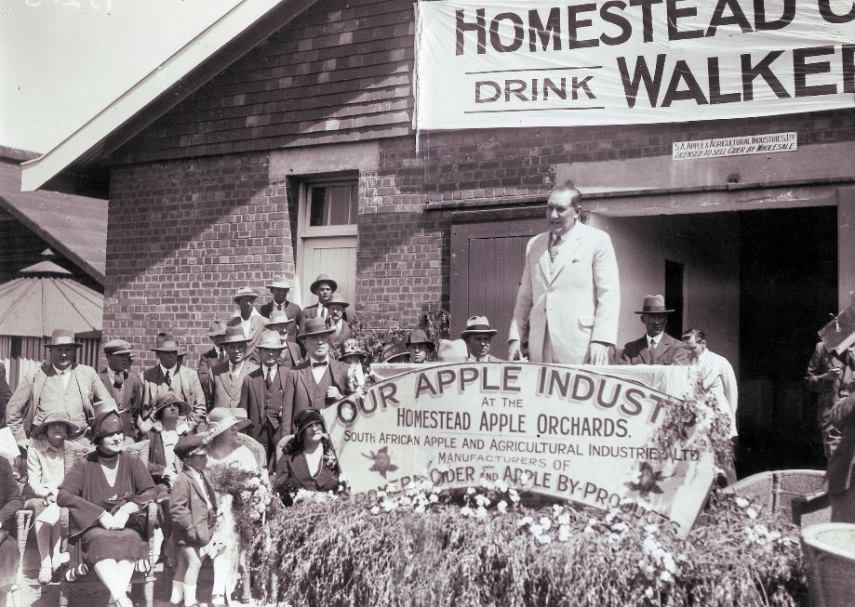
Development in Homestead Apple Orchards (HAO) properly began in 1928, though some older homes date to the turn of the 20th century. Mrs Elizabeth Cronjé has lived in the same house in 9th Avenue since 1945. After her husband returned from fighting in Egypt, the couple engaged Italian prisoners of war — paid one shilling a day each by the family and an equal amount by the government — to help enlarge their home. The workers were repatriated in 1946. At the time, neither electricity nor municipal water had reached the area.
Adventures on the Walkerville Bus Route
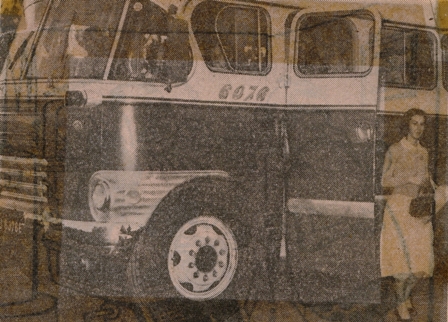
By the early 1950s, Walkerville’s bus service had become a partisan affair. The old Vaal Bus Company still operated its Guy, Albion, and Bristol vehicles, while South African Railways introduced Canadian-built BRIL streamliners — capable of hitting 80 miles per hour on the long downhill run to Eikenhof — and competed fiercely for the route. The BRIL buses dominated for more than twenty years.
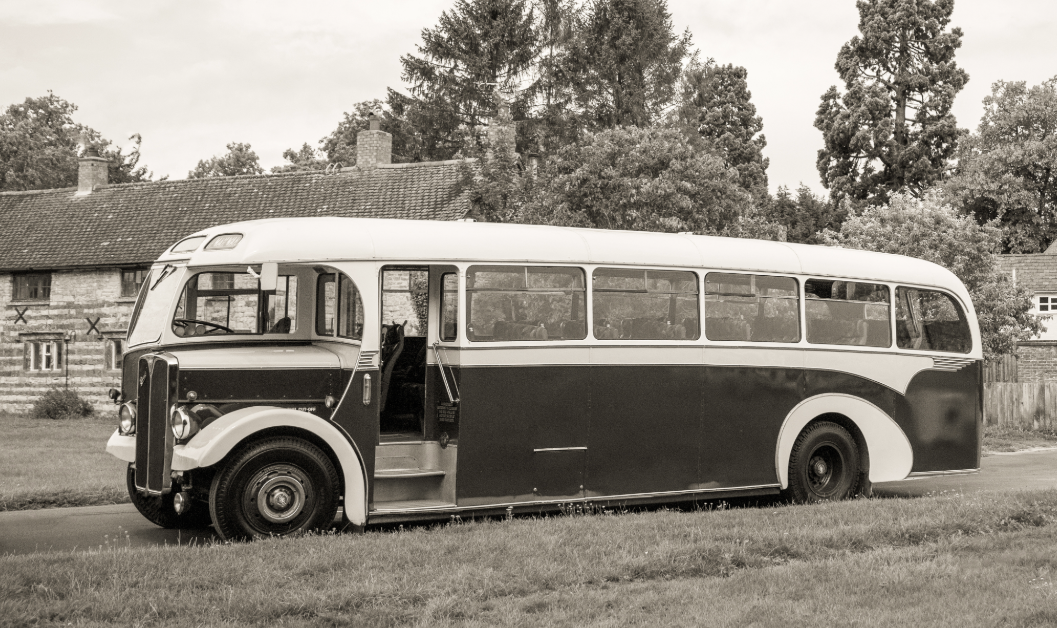

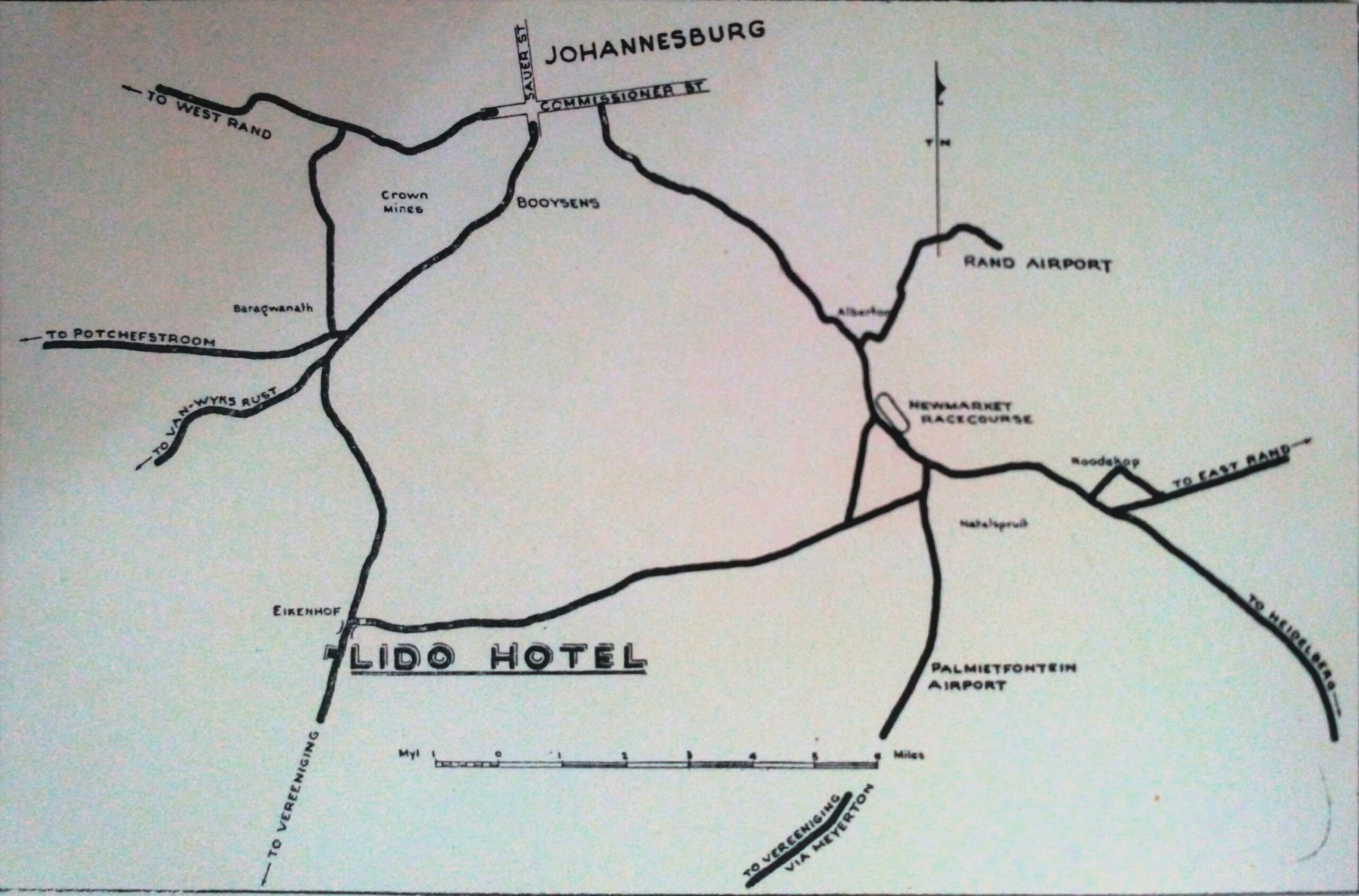
Bus travel was a sociable affair and produced many lively stories. Regulars Syd, Syddie, Jim, Joe, and Bob — all family men past forty — worked long hours in the city and unwound at the Lido Hotel on Friday afternoons. Piet, the last-bus driver who bore a striking resemblance to Bing Crosby, regarded it as his sacred duty to collect his passengers from the bar and from under the tables before continuing homeward. He would park outside the hotel, send someone in to give the men five minutes’ warning, then retrieve any stragglers personally.
One Friday night on an almost empty run, Piet stopped the bus at Hartzenbergfontein and confided that he was in a mood for love, intending to visit a young lady nearby. The intrepid five promised to guard the bus. When the house lights went out and Piet failed to return, they assumed he had stayed the night — and commandeered the bus, driving themselves home.
Photo credit of the Lido Hotel website, click on the photo to go to the website

Piet emerged to find his bus gone. With no option, he walked to Walkerville to find a telephone and report the loss. By then the whole village knew what had happened — a well-lit bus parading the streets at dawn, its passengers hanging out the windows singing bawdy songs, was not easily misinterpreted. Syddie, a gifted pianist despite having lost his front teeth in a dispute at the Lido, made expert use of the horn. At daybreak the bus was found neatly parked on the tennis court of a local curmudgeon notorious for complaining about cooing turtle doves
Police investigated, then departed. The bus was returned undamaged, Piet had enjoyed his evening, and the community — loyal to its own — said nothing to outsiders. After two weeks all was back to normal, though Joe was seen heavily bandaged and muttering about bus doors that don’t stay shut.
The Ohenimuri Golf Course
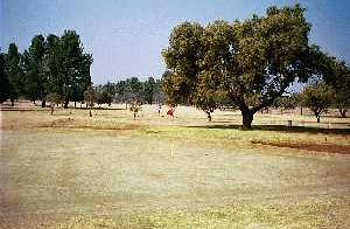
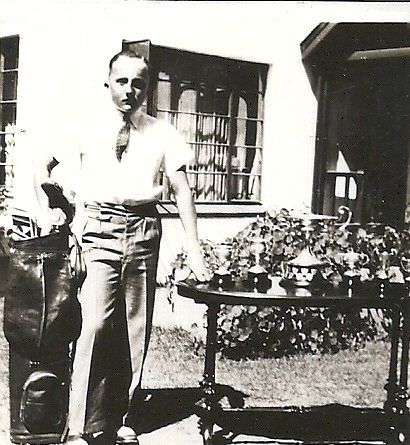
The Ohenimuri Golf Course — named after an Australian apple variety — was once the thriving social centre of the area, counting important names from South Africa’s political past among its lifelong members. Built in 1934, it was later restructured by the great Bobby Locke. John Bland, born close by, often skipped school to practise his swing there (his father managed the tennis club). Arthur Walker II, who donated the land on the condition it remain a golf club, played there regularly — and was, to put it mildly, rather good: he was both South African and English Amateur champion.
photo courtesy of the closed down Google page of the golf course
The MacDougall Farm, Varkensfontein
Note: The origin of the name Varkensfontein is given in the source document as ‘named after the arum lilies that grew wild in the area.’ This is almost certainly incorrect — varken is Afrikaans for pig, not arum lily. The true etymology likely relates to wild pigs that once inhabited the area.
The old barn on the MacDougall farm in Varkensfontein has served only as a hay and teff store. The property belonged to the Walker family until Arthur Walker II’s death in 2005, after which the MacDougalls — who had been renting for nearly 30 years — purchased it. The shed still stands, now home to a flock of peacocks. The main farmhouse, built in 1896, retains its original high ceilings, sash windows, and stained glass despite some veranda modifications.
Perdeberg
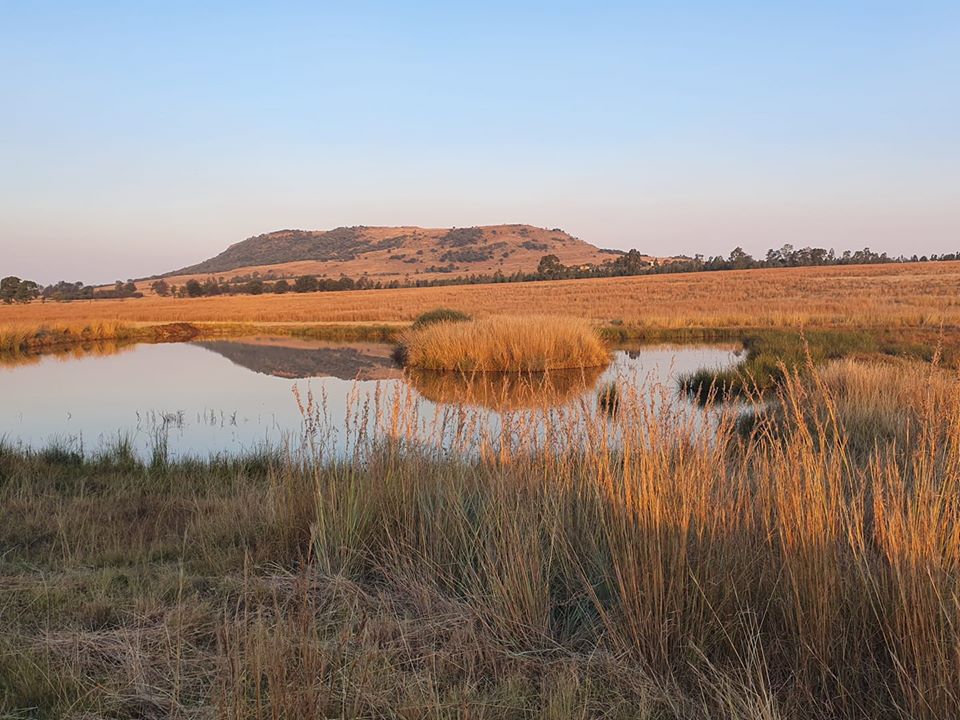
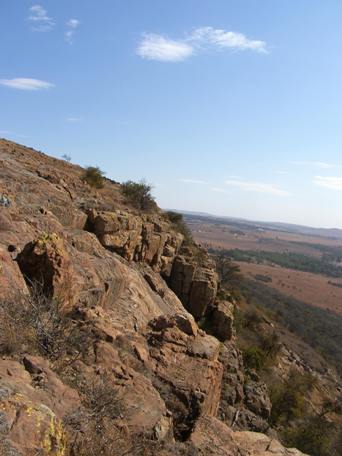
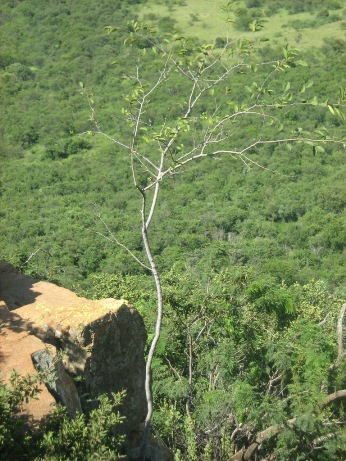
Rumour abounds about this koppie. Was it the scene of fighting between Boers and British Redcoats in the First War of Independence? An observation post that changed hands during the Anglo-Boer War? Or does the deep hole conceal a well, or an iron-mining shaft dug by tribes passing through on their way to Zimbabwe? One thing is beyond dispute: it is a peaceful and beautiful vantage point today.
Workhouse Farm — Colin Tegner’s Coach Works
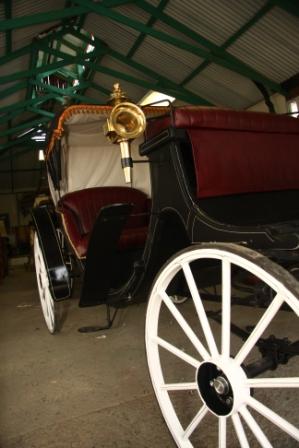
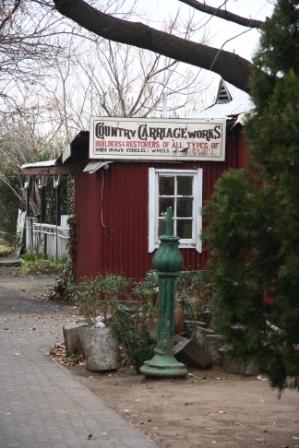
Situated in Walker’s Fruit Farms, Workhouse Farm is where craftsmen practiced skills from a bygone era — building coaches and carts entirely by hand, including the wheels, using techniques passed down over three generations. Colin Tegner was a resident of Walker’s Fruit Farms since the 1960s. A coach builder of established reputation, he supplied all the coaches at Gold Reef City and was commissioned by the King of Lesotho to build a Landau State Coach for delivery in September 2008. His property houses several buggies, wagons, and an omnibus, all built or restored on site.
Commandant Hendrik J. Kamffer
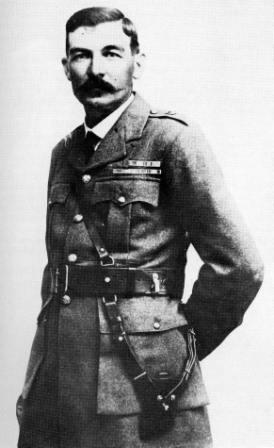
Hendrik Kamffer, a local farmer at Hartzenbergfontein, began his military career under Commandant Weilbach. At the Battle of Modderspruit on 30 October 1899 he was just 20 years old — he had already served in the Jameson Raid three years earlier at 17. His younger brother Willem, aged 18, fought alongside him.
By the Battle of Ladysmith on 7 November 1899, Kamffer had been promoted to Corporal. He was placed in charge of the guard on Lombardskop on 7 December, tasked with protecting 4.7 Howitzer guns and a Long Tom cannon. At 02:00 the British advanced stealthily and surprised the sleeping guard, capturing the guns — an incident that led to the suspension of Commandant Weilbach and Org Meyer.
At the Battle of Spioenkop on 24 January 1900, Kanfer witnessed the deaths of comrades Willem Marais and David van Staden, and tended to the wounded under fire until after dark. The following day, during a truce for burial, he interred Marais and Van Staden on the northern edge of Spioenkop alongside burghers from the Rustenburg, Middelburg, and Pretoria commandos.
At Paardeberg, the Heidelbergers — now under Commandant Cornelis Spruyt — were sent to assist the Free Staters where General Piet Cronje’s laager was trapped. When the British Gloucester Regiment advanced on Org Meyer’s Klipriver men with fixed bayonets, Kamffer and Willem held their position in the trenches. Spruyt rode into the British column and was captured. Kamffer and Willem retreated under heavy fire; Hendrik was struck by a splinter in his left leg. Spruyt later escaped by throwing himself from the POW train and walking four nights without food.
Willem Kamffer was killed at Houtenbeek near Bloemfontein on 29 March 1900, charging forward despite Hendrik’s warnings.
Kaffier’s most dramatic engagement came on his 21st birthday, on the family farm at Hartzenbergfontein. He charged alone at a dismounted English cavalry unit, bluffed a soldier into surrendering his rifle at gunpoint, commandeered an enemy horse, and galloped back to his own lines under fire — sustaining a shot through his right hand. His mother watched from the farmhouse back door in anguish. He was treated that night by a young widow, Mrs Bosman, who washed the wound and soaked it in warm bran-water through the night, saving his hand and possibly his life
After the battle at Mauchberg on 6 September 1900, Kamffer was appointed Veldkornet by General Piet Viljoen and instructed by General Louis Botha to return to Heidelberg to round up burghers who had surrendered. With five men he ambushed small British units to re-arm his recruits. He also guided General Smuts in a night assault on British forts near Jachtfontein on the West Rand in January 1901 — fort after fort was taken, and when a British officer called for bayonets, Smuts announced himself and the garrison surrendered.
In 1902 Hendrik married his wartime fiancée, Alida Laubscher. The family donated land for the Hartzenbergfontein Government School, later renamed Aloe Ridge Primary School. Hendrik and Alida raised eight sons and four daughters. He served as commandant during the 1914 Rebellion, was promoted to Lieutenant Colonel in 1922 during the Rand Strikes, and made full Colonel in 1943. He died in 1952, aged 73, the day before his golden wedding anniversary.
After the war, Kamffer wrote a memoir titled Herinneringe (Memories). It was never published, but a copy of the manuscript is held in the archives in Pretoria. Ian S. Uys’s published account of Kaffier’s wartime experiences is, by any measure, a gem for students of Boer War history.
Today three Kamffer farms operate in the area: Piet Kamffer’s farm on Platberg Mountain, Matthys Kamffer’s farm in Hartzenbergfontein, and Willie Kanmffer’s farm in the Drumblade area.
The Blockhouse at Walkerville
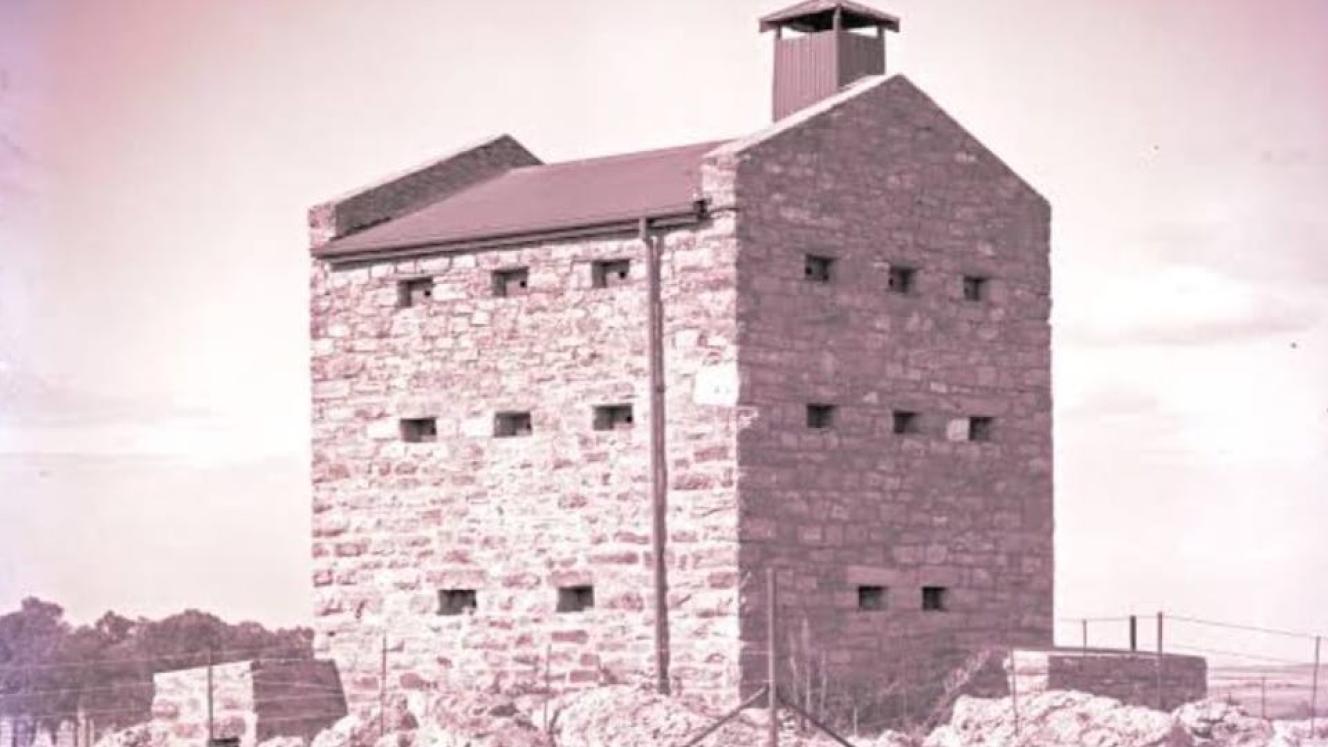
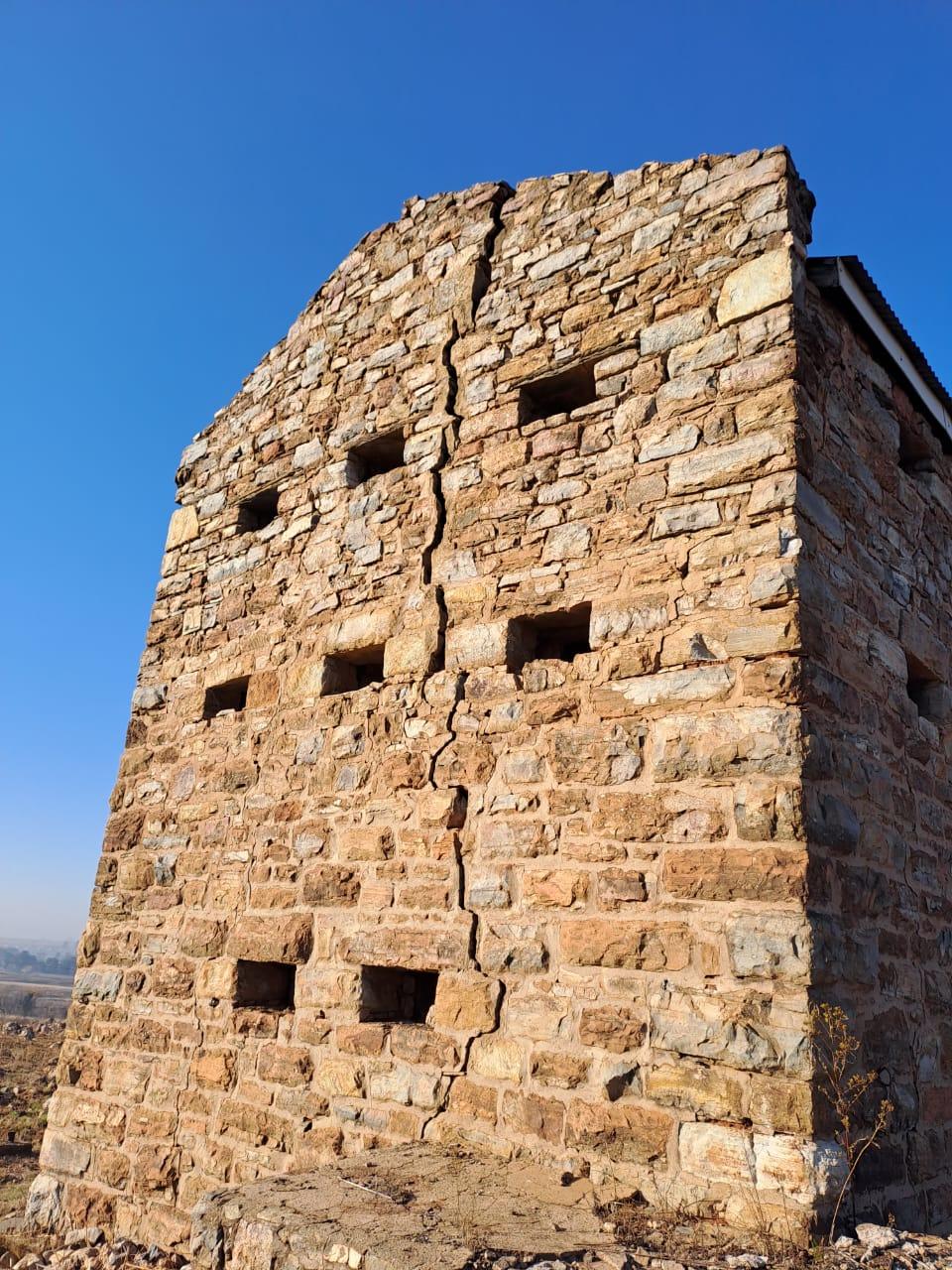
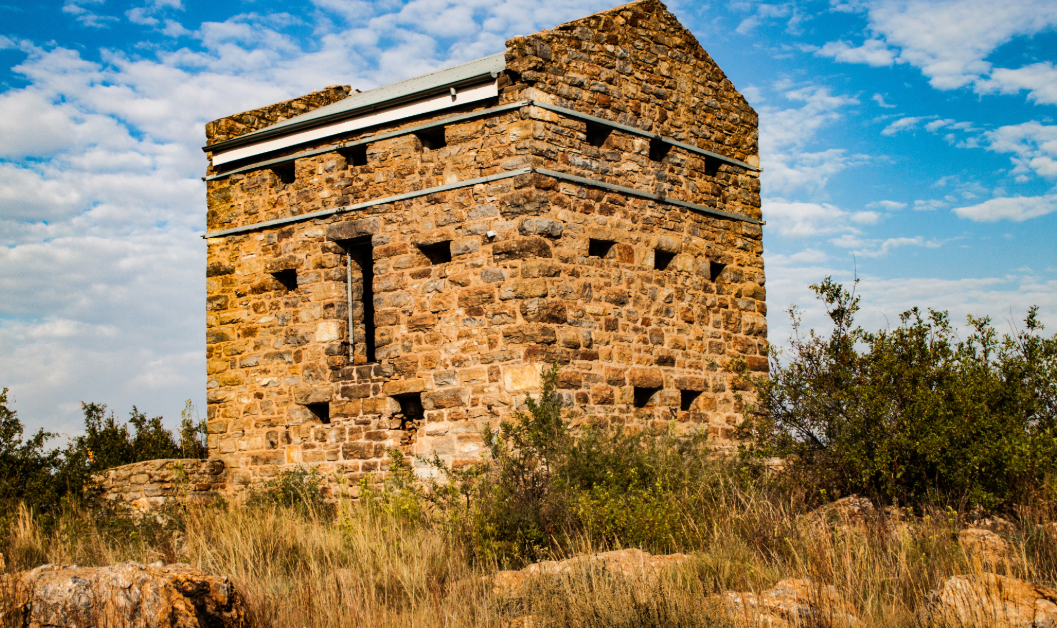
On the road between Alberton and Meyerton, on the eastern edge of Walkerville, stands a British blockhouse built during the Anglo-Boer War (1899–1902). It formed part of a 54-kilometre line of defensive posts stretching from Johannesburg to Vereeniging, and is today the only surviving example — preserved as a National Monument.
The blockhouse system was introduced in November 1901 under General Lord Kitchener to protect the Johannesburg area from Boer commando raids on towns and railway lines. It was later extended to isolate the principal combat areas and trap the forces of Generals De Wet, De la Rey, and Smuts — though each commander outmanoeuvred the system with ease. General De Wet dismissed it as the ‘blockhead’ system.
The standard blockhouse consisted of two concentric circles of corrugated iron filled with stone chips, with firing loopholes. More permanent rectangular two-storey stone versions were built at bridgeheads and town entrances; examples of these have been proclaimed National Monuments across the country.
Image courtesy of the Our Forgotten Heritage page. Click on the picture to go to their website
The Battle for Johannesburg via Walkerville
Note: The following events took place before Walkerville was formally established. References to ‘Walkerville’ refer to the geographical area.
On 27 May 1900 the Boer position was increasingly untenable. After months of retreat from the Tugela and Modder Rivers, the British forces under Lord Roberts stood ready to cross into the South African Republic. General Louis Botha’s commando — some 6,000 men [the original document reads ‘60,000’, almost certainly a misprint] — was massed around Vereeniging, with reinforcements called in from Johannesburg and Mafeking.
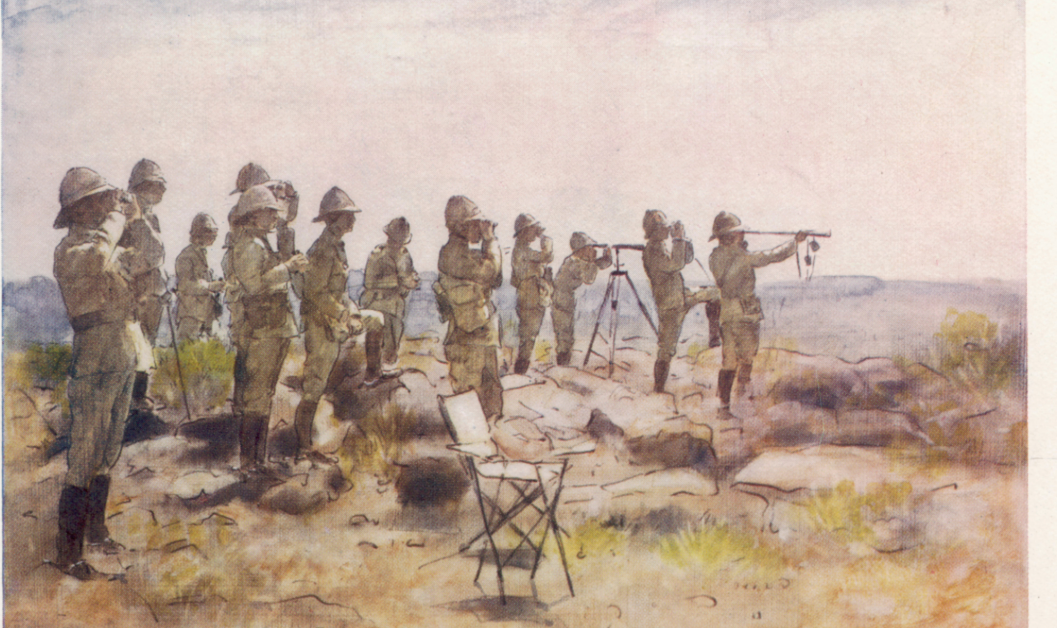
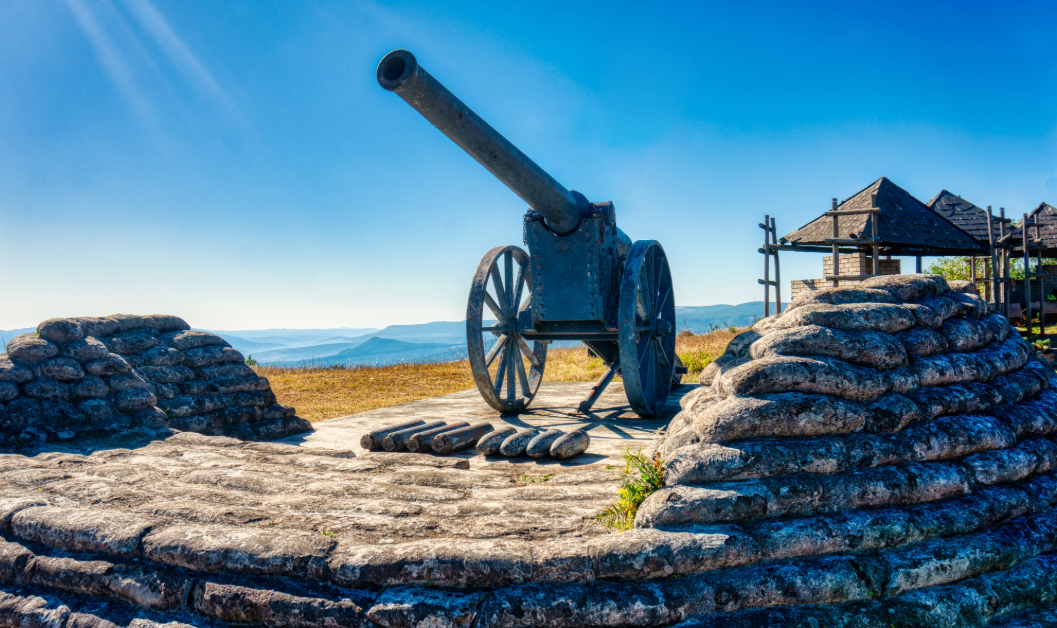
Leaving 500 men at Viljoen’s Drift to delay the British crossing, Botha fell back to Meyerton, then to Klipriver Station. Lord Roberts crossed the Vaal at Viljoen’s Drift and at Lindique under General Hamilton, while General French’s cavalry moved through Houtkop, Syferfontein, and Vlakfontein — encountering stiff resistance at each point. General Lemmer held a strong position at Vlakfontein’s defile, but was ultimately driven back by a dismounted assault by the Inniskilling Dragoons, assisted by General Hutton’s 4th Brigade
French’s forces rested overnight at Doornkuil — now firmly within the boundaries of Walkerville. The area now known as Blue Saddle Ranches also saw fighting during the advance. Botha, recognising the Gatsrand was lost, ordered an orderly retreat to the Klipriversberg hills to defend Johannesburg.
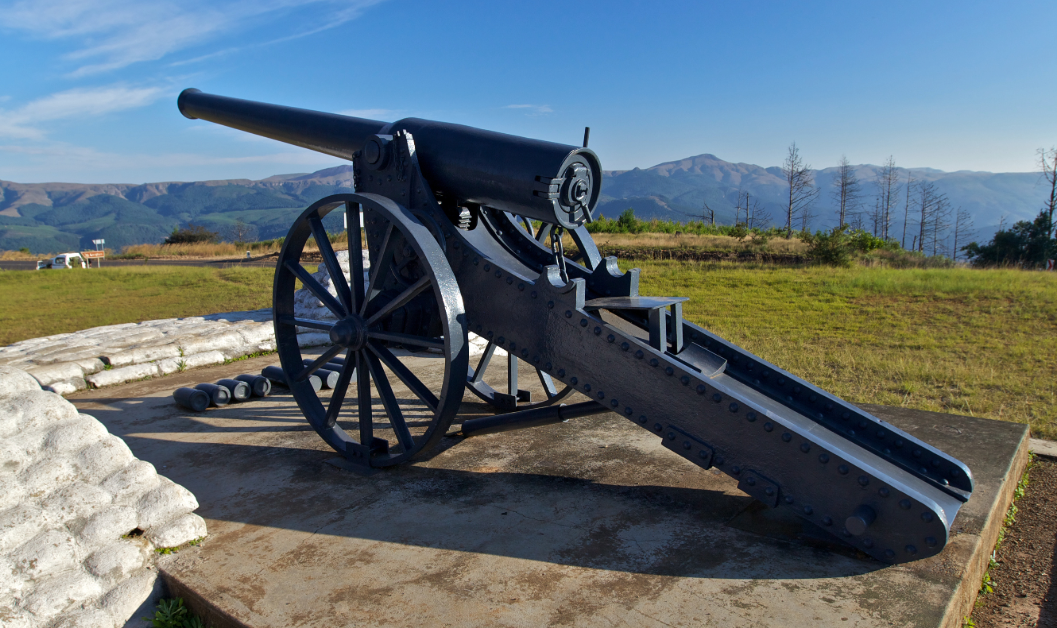
The subsequent Battle of Doornkop resulted in heavy casualties on both sides and the fall of Johannesburg to the British, forcing the Boers to retreat to Pretoria. Though the main campaign was effectively over, Generals De Wet, De la Rey, and Smuts continued commando operations for another two years until defeated in 1902.
Peace negotiations produced the Treaty of Vereeniging, signed on 31 May 1902